


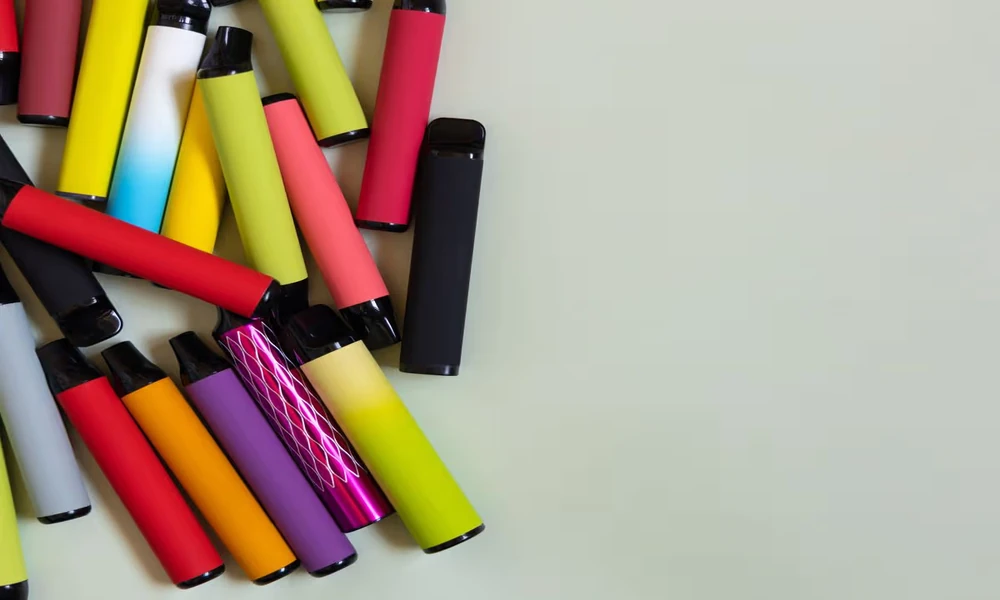
A rechargeable vape battery gets charged by connecting to a USB power source through a charging port built into the battery body or base, where current flows into the lithium-ion cell until the internal charge management circuit registers full capacity and stops the flow automatically. Reuse follows immediately after charging completes, with the battery returning to full operational capacity each time a charge cycle finishes. Rechargeable Vape batteries are designed to complete this charge and reuse cycle repeatedly across the working life of the device without any component replacement or technical involvement from the user.
USB charging connection
Charging port location varies across rechargeable vape formats. Cigalike batteries typically charge through a thread connection where the battery screws onto a dedicated USB charging cable rather than using a standard port. Pod system batteries and rechargeable disposable formats more commonly use a micro-USB or USB-C port built into the base of the device body.
Both connection types achieve the same result. Current from the USB power source enters the device and flows into the lithium-ion cell through the internal charging circuit. Power source can be a wall adapter, a laptop port, a car charger, or a portable power bank, provided the output matches the charging requirements of the device.
Charge cycle mechanics
- Current entering the lithium-ion cell during charging drives a chemical reaction that restores the energy stored within the cell.
- Charge rate is controlled by the internal circuit, which adjusts current delivery as the cell approaches full capacity to avoid overloading the cell chemistry at high charge levels.
- Charge time depends on cell capacity and the output rating of the USB power source being used.
- Compact vape batteries with smaller cell capacities typically reach full charge faster than larger format batteries.
- Internal circuit cuts current delivery automatically when full capacity is registered, so leaving the device connected beyond the point of full charge does not continue adding energy to the cell under normal circuit operation.
Reuse after charging
Once charging completes, the battery detaches from the charging connection and returns to active service immediately. No warm-up period, no reset sequence, and no setting adjustment sits between completing a charge cycle and using the device again. Cartridge or pod attachment on formats where the consumable is removed during charging reconnects in the same motion as always, and drawing through the mouthpiece activates the device straight away.
Reuse capacity across charge cycles depends on lithium-ion cell chemistry and how the battery is used between charges. Cells charged regularly before reaching complete depletion maintain performance more consistently across a greater number of cycles than cells repeatedly run to empty before charging begins. This pattern of use extends the period across which the battery delivers consistent output during draws, keeping vapour production steady across more charge and reuse cycles before any capacity reduction becomes noticeable.
Long-term reuse pattern
- Each charge and reuse cycle counts toward the total cycle count the lithium-ion cell is rated to complete before capacity begins declining gradually.
- Compact vape batteries are rated across a defined number of these cycles, after which the charge held per cycle reduces incrementally rather than stopping abruptly.
- Daily charging habits directly influence how many usable cycles the battery completes before that reduction becomes noticeable during draws.
- Users who charge consistently and avoid repeated deep discharges will find the battery maintains useful output across a longer period of daily use.
Reuse across many cycles without any component replacement is what defines the rechargeable vape format and separates it from single-use disposable devices in practical daily operation.
